Friday, August 5, 2011

How to Commit a Crime for Fame

Many people commit crime for money, some for love, and then there are those who'd go at extreme lengths for fame. But what does it take to become a successful criminal, if your goal is just to be remembered?

The Crime of the Century

The crime of the century (the 20th century that is, which makes it pretty ancient today) was the kidnapping of the 18 months' old Charles Augustus Lindbergh, Jr., son of famous aviator Charles Lindbergh and Anne Morrow Lindbergh. A gigantic man-hunt followed, kidnapping became a federal crime and thus the FBI got involved, one of the witnesses committed suicide due to violent police tactics, and, after the child's body was discovered, Bruno Hauptmann (one of the names we should forget) was arrested and sentenced to death in a circus-trial.
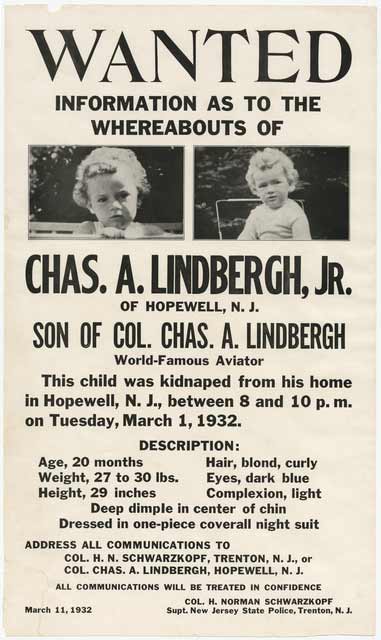


What's more interesting is that, during the investigation, over 200 people came forward with false confessions, claiming to have kidnapped the child. Their motivation? They wanted their names in the newspapers. In fact, studies suggest that most voluntary false confessions are driven by the same motivation: fame. (How unimaginative. Go commit your own crimes, the real criminals must think.)

Let's Just Remember John

Also in the ancient 20th century, there was a guy who identified himself with Holden Caulfield from Catcher in the Rye and with Dorothy from the Wizard of Oz. That's not a crime, is it? It also won't make you famous. So this guy, Mark David Chapman (one of the names we should forget), found another method. 25 years later, he pretty much admitted that he killed John Lennon for fame: "The result would be that I would be famous, the result would be that my life would change and I would receive a tremendous amount of attention, which I did receive.”

The Media is to Blame... Not

Let's turn off MTV for a moment to get real ancient here, with one of the Seven Wonders of the World: the Temple of Artemis in Ephesus, possibly the first Greek temple made in marble, with columns standing about 40 feet high. When it was completed, the temple became an instant hit and a major tourist attraction... for a very short while.


On July 21, 356 BC (notice how exact we are with dates here), Herostratus set the temple on fire, for the sole purpose of getting his name remembered for generations. Apparently, for every seven wonders of the world, there is one maniac who'd do anything for fame. The catch here is that messing with a wonder of the world may get you a little more than the regular 15 minutes of fame, as Herostratus proves. (We know the exact date because it's also the day when Alexander the Great was born. Plutarch, with his weird sense of humor, noted that the goddess Artemis was too busy delivering Alexander to take care of her own temple that day.)

Herostratus was swiftly put on trial and sentenced to death, but the judges of the time also instituted a more appropriate punishment: his name was to be erased from all documents, and nobody was to mention him anymore, under threat of death. Appropriate punishment, but nonetheless an epic fail: two thousand years later we still have the phrase Herostratic fame and the German word Herostrat, meaning basically somebody who commits crime just for glory.

Fortunately, today we no longer have to destroy a wonder of the world to get famous. That's what Facebook is for.   

Thursday, August 4, 2011

Praying to Ancient Gods for Inspiration

I got a gig to write about the literary image of Dionysus, and I was pretty excited about it all. I rarely get paid to write about what I like and know, and this seemed a rare opportunity.

But the paper was going nowhere. I did tons of research, drew the outline, named the chapters, but the words would not sit on my computer screen. Three days before the deadline I only had a bunch of unattached phrases and a ton of spelling mistakes.

Then I thought – this is about Dionysus, the god of inspiration and theatrical representation. Why not ask him for some help? So I turned to wine, and a couple of bottles later the only achievement was that I completely forgot about my deadline. Not good.

And then, the 3 am miracle, the epiphany: I was doing it all wrong. The inspiration was not in the glass of wine, Dionysus does not approve of such behavior. He's not the god of binge drinking, what was I thinking? Dionysus is the god of social binge drinking!

A day before the deadline, I made paella, asked some friends over, downed several bottles together, ate melons and ice cream, drank some more, and there you have it, my paper was ready, delivered with plenty of time to spare (hey! 30 minutes is plenty of time to spare. You just have to cherish every second.) and today it got approved and paid.

It pays to pay for the ancient gods for inspiration. Thank you, Dionysus. Now, what are we going to do about the headache?  

Euripides' Bacchae - Character Analysis: Dionysus

The storyline was undoubtedly familiar to the public of the time, as it should be to modern audiences as well. Dionysus, the god in human form, comes up on stage in the very beginning to detail the plot line, announcing straightforward that he's seeking revenge for the treatment he and his mother received from their mortal relatives. The god is angry and vengeful – but without his direct announcement, the audience would have no way of knowing – throughout the rest of the play, Dionysus is the embodiment of calm grace.

The force behind events that change the world, Dionysus himself is a static character: gods don't change. He is multi-faceted and ambiguous, and the human form he takes on stage is just one his many; however, he does not evolve – rather, he pushes others on the path of spiritual evolution. Unchanging, Dionysus is the god of transformation and rebirth, and of all the perils that lie when one renounces social individuality in search of deeper inner knowledge. Even more, Euripides' Dionysus is the god of the mask, not just of theater masks, but the ones people wear every day to maintain their social status. In the same line of interpretation, he's also the god of letting the mask drop to reveal the deepest secrets. Dionysus slowly pushes the proud Pentheus to reveal himself, showing that there's nothing behind the ruler's mask – nothing but death.

The entire play is heavy on dualities: law and chaos, civilization and barbarism, Pentheus and Dionysus, old (Tiresias and Cadmus) and young Asian Bacchae, humans and gods, hunt and murder, religious tradition and innovation. For Dionysus the god, there's an interesting parallel drawn early on, by Pentheus, who claims the women of his land are not praying to the new god, but rather lust for carnal pleasures: “Bacchios! Nay, ’Tis more to Aphrodite that they pray.” This is the first sign that Pentheus refuses to accept the sublimation of deep, inner instincts brought by Dionysus, and prefers the most common, earthly version that people are simply seeking to satisfy their primordial instincts.

The interpretation of the godly powers of Dionysus gathers immediately a new dimension, when the blind prophet Tiresias draws a new parallel, this time justly so, with Demeter, mother Earth. Both Demeter and Dionysus were gods of rebirth, and both were celebrated in mysteries that remain covered in shrouds to this day. It should also be noted that the two old and wise characters, Cadmus and Tiresias, both decide to embrace the cult of the new god and feel his rewards, without being caught in the spell cast by Dionysus over Thebes:
Aye, men will rail that I forgot my years,
To dance and wreath with ivy these white hairs

For the audiences of the time, there was no need to prove Dionysus as a rightful god, it went without saying, but Cadmus and wise Tiresias both act as literary reinforcements of the cult's legitimacy.

The effeminate looks of the human form of Dionysus are essential in understanding the character and the impact he makes, and Pentheus never ceases to mention them. The first thing Pentheus wants to do when he apprehends Dionysus is to cut his curly hair, and he receives the answer: “I have vowed it to my God; 'tis holy hair”. That's a strange argument to hear from Dionysus the god, it means that his hair is vowed to himself, a very early “beauty for beauty's sake” argument.

Dionysus' intervention in the human world is not brutal and direct; rather, he unleashes the hidden forces of human nature, and lets events unveil at their own pace. He could strike down Pentheus and Agave, he proves so when he destroys their palace with an earthquake – but then again, he is a god, and doesn't need to prove anything.

Dionysus is without a doubt cruel, all ancient Greek gods were. The image of Agave carrying her son's head, boasting about her kill, is bone-chilling, surpassed only by the moment when she realizes she murdered her own son. Euripides' Dionysus doesn't push anybody to murder – he simply allows people to follow their instincts – which prove disastrous. The question that lingers at the end of the play is would Dionysus allow Pentheus to live, had he seen his errors and embraced the new cult? In mythology, events are fixed, and once the spell is cast on the women of Thebes, there is no turning back. From a literary perspective, however, Euripides' Dionysus subtly hints that redemption is not utterly impossible.

Death of Pentheus

The most important question is now what meaning has Euripides' Dionysus mean for a modern audience, for those who know relatively little of the conventions of ancient Greek, and have limited time for finding more. Beyond the respect we owe to a piece of ancient literature, does this character still speak to a contemporary sensibility? We are no strangers today to various escapism methods, but we also tend to seek confirmation for our preconceptions in theatrical and all other entertainment experiences, so Dionysus still stands as a stern reminder of balance in duality. There is no reality without fantasy, no order without chaos and no law without transgression.  

Monday, August 1, 2011

Top 10 Songs with Latin Lyrics

You know anyone who still uses the Latin language today? Except for your Latin teacher, I mean. There are quite a few bands out there, and here's my very personal top 10 songs with Latin lyrics. Before we get to it, a word about one of the most popular songs in Latin, which you won't find in the top: Helloween's Lavdate Dominvm. I listen to Hellloween every now and then, and they're coming to a town near me for a concert this summer, but this particular tune is getting on my nerves.


10. Rhapsody of Fire - Lux Triumphans
There's quite a large number of progressive rock bands that use Latin lyrics; I can't – or rather, don't want to include all of them. I am a little partial to this band called Rhapsody of Fire (if I'm not mistaken, they previously called themselves simply Rhapsody), that makes an interesting mix of Latin and English lyrics:
Furia cieca, caos in me
Demoni
Lead me to your horned beast named king

9. U2 – Gloria
Again, a combination of English and Latin lyrics, but let's get to what really matters: wasn't Bono young? Weren't we all back then?

8. In Extremo - Totus Floreo
"Sile philomena pro tempore 
Surge catilena do pectore
O, o, totus floreo"
Huh?
Anyway, In Extremo have a bunch of other songs in Latin, which is somewhat better for my ears than when their singing in their native German.

7. Simon and Garfunkel – Benedictus
Not a lot of creativity here, but never met anyone who didn't like these guys.

6. Deus ex Machina - Perpetua Lux
I mean the Italian band called Deus ex Machina (there are at least three bands with that name that I know of, most likely more). The entire album - De Republica - is pretty awesome on the whole, and full of Latin lyrics, if you're into progressive rock. 

5. My Dying Bride - Sear Me
So, now we're getting serious with some heavier stuff. I'm a bit surprised that there aren't more death/doom bands using Latin words, seems to suit their genre in a way. Not that it matters, 'cause nobody understands the lyrics anyway. Argh, never mind. My Dying Bride is one of the best bands out there, by the way. 

4. Cat Stevens - O Caritas
When I was 17, I spent an entire year listening to nothing but Cat Stevens. If you're looking into learning Latin, I suggest you start with this song. It's like learning German with Rammstein. 

3. The Cranberries - Electric Blue
One more combination of English and Latin lyrics (I'm going to brand this an Irish thing and won't comment on it). I've seen The Cranberries live, by the way. Totally off topic, just wanted to brag about it. 

2. Kamelot - Memento Mori
I had to search the lyrics four times to find the Latin bits, but this is one of the my favorites this year, so who cares if all it has is "Dulce et decorum est / Pro patria mori / memento mori"? It's quite enough to make it on my list. 

1. The Misfits - Halloween II
Latin should be the language of punk, if you ask me: short and to the point. There's a lot of meaning you can squeeze in two minutes or less. Besides, this has been a classic punk summer for me all the way – and it's not over yet.
There is one other reason this song is number one on my list: it's very creative use of the Latin language. This is not the standard stuff they teach in school, it's about witches and wolves and trees and stuff. 
"Formulae ueteres exorsismorum et excommunicationum
Strigas et fictos lupos credere
Daemon pellem lupinam
In trunco quodam cauae
Arboris occultandum"
Goes to prove that Latin is very much alive and kicking. So is punk.  


Filip Florian - Little Fingers - Book Review


In modern day Romania, once a border province of the Roman Empire, archaeologists working to uncover a Roman fort stumble upon a mass grave. As the bones surface, former political prisoners and the sensationalist media will stop at nothing to prove that this is the site of mass murders committed by the Communist regime. The archaeologists sulkily stand aside, waiting for the truth to be uncovered, (but whose truth?) so that they can go on with their work.

Little Fingers, Filip Florian's debut novel, has all the premises for a historical mystery, but it turns out to be something else. It's more of a gallery of picturesque portraits, interwoven to in a meditation on history – how long does it take for a crushed, devastated generation to let go of the past, allowing it to become history?

It's not really a book on ancient Rome, as you've probably figured out, but the ruins of the Roman fort serve as foundation for the unraveling modern events in Little Fingers. The theme is deep and disturbing, some of the portraits are memorable, and the style is brilliant in places. In a few places. Quite often, the abundance of adjectives makes it very inviting to skip a few paragraphs – that is, if the book would have any paragraphs. But it doesn't.

Little Fingers left me with an overall impression that it could have been a brilliant short novel, instead of a full-fledged novel that's dragging in places. The characters get a long introductory presentation, with very little development to follow – and the fruit-salad comparison for the archeologist's girlfriend is a trying experience for any reader. Same goes for the long and obviously dogmatic digression that introduces the Argentinian characters – that play little part from then on – and for the author's obsession to explain his metaphors and connections (if you are familiar with soccer, you'll get them without explanations, if you're not – you won't get them anyway, so several pages are an exercise in futility).

I'd say that Filip Florian's Little Fingers is an overly ambitious exercise for a first novel. You may want to pick it up when you have some free time on your hands – I had the feeling that I had to finish it in one sitting, or I won't pick it up again. Fortunately, it's short. You may also want to read it it you have an interest in the massively under-estimated Eastern European literature, or if you want to check out the first work of someone who promises to become an excellent novel writer.

By the same author: The Days of the King
(also dealing with Romanian history, and a much better literary achievement)

Tuesday, July 19, 2011

Iggy's Caesar Lives

In my previous post I mentioned Iggy Pop in a weird analogy, but that reminded me of something I've been meaning to say for quite some time now. As you all (should) know, Iggy has an album called American Caesar, and one song named Caesar - but perhaps fewer people know that he wrote a brief commentary to Edward Gibbon's Decline and Fall of the Roman Empire.

I mean, for real. And it was published in an actual scholarly magazine called Classics Ireland. "I urge anyone who wants life on earth to really come alive for them to enjoy the beautiful ancestral ancient world." We should all listen to Iggy.

(Couldn't really bring myself to post Caesar, which I don't like that much, but here's something from the same album.)

The Story of Cytheris / Lycoris – or How to Make it Big as an Actress in Ancient Rome

It was around 70 BC and the Roman Republic was getting ready for its dying years when a new type of theatrical representation gathered popularity in the city: the mime. It was a show that included singing, dancing, acting, mythological references, bathroom humor, striptease, political jokes and a lot of improvisation – so pretty much throw in anything short of the kitchen sink, and you've got a show. Another thing about these mimes was that they allowed female actresses – the mimae – as opposed to the classic tragedies and comedies, where all the parts were played by men.

Troubled times bring new opportunities for those who know where to look, and the success of the mimes brought a shiny new career path for women in ancient Rome – especially since there were very few opportunities for them anyway.

At about that time a slave girl was born in the house of the Roman knight Publius Volumnius Eutrapelus. Years later, she became a famous mima, and when she was freed, she took the name of Volumnia, after her master, and the Hellenized cognomen of Cytheris – hinting to the Greek Aphrodite, the goddess of Cythera. However, Roman freed slaves were not actually free to go seek their fortunes as they pleased; they remained in the service of their master – so freeing an actress slave like Cytheris was not an act of gratuitous kindness. There surely was a hidden reason for it.


Hidden, and no so much – as shortly after Cytheris embarked in a passionate love affair with Mark Anthony (the one of Anthony and Cleopatra and “Brutus is an honorable man” fame). See, Anthony was a senator, and it wasn't proper for a senator to be seen with somebody else's slave all day long. It wasn't proper for a senator to be seen with an actress, either, but Anthony was quite famous for doing only improper things – and an actress was somewhat more acceptable than a slave.

And Eutrapelus? Well, there were troubled times, and power shifted overnight. It was important to have someone close to the power players of the day, and Cytheris and Mark Anthony could not have been closer. And the scandal erupted.

Political opponents made fun of Mark Anthony calling him Cytherius – Cytheris's man – and the self-righteous Cicero fumbled, pointing out that Anthony's entourage called the woman Volumnia – which would have been the name of the daughter of Volumnius of the equestrian order – instead of Cytheris – the cognomen which clearly placed her among freed slaves. Cicero's life was filled with such matters of the utmost importance, which is why nobody could blame Anthony for killing him several years later.

Anthony, sexy as always

Anthony made a fool of himself, as he usually did with ladies, but Caesar, still alive and very much in power at the time, would have none of it: so he ordered the love birds to break it off, which they quickly did.

After that, Cytheris had a short-lived affair with Brutus (of the “Brutus was an honorable man” fame), but that didn't last, mostly on account of Brutus being a fugitive soon to be dead traitor. It was also around that time that Cicero, somewhat reconciled with Cytheris now that Anthony was out of the picture, went to see her play, and was so impressed he wrote a letter on how moved he was by each verse she recited. Which, of course, was too little too late and he'd still wind up dead.

Things were on fast forward in those days, and soon Caesar was dead, Brutus was dead, Cicero was dead and Anthony was with Cleopatra and neither was feeling very well. The new man in the town was Octavian, and Cytheris decided (or rather, Eutrapelus decided for her) it was time to stay close to somebody from the new political elite, and that somebody was Gaius Cornelius Gallus, politician and poet (deadly combination), who had just taken the newly created position of prefect of Egypt.

Ancient Rome's Chelsea Girls


Gallus was supposed to be one of Rome's greatest poets, and he wrote four volumes of elegies to honor his beloved Cytheris, now poetically renamed Lycoris (following the Clodia – Lesbia tradition. Speaking of which, Gallus also complains of how cold and heartless his lover was to him, which we know cannot be true, so it must have been a poetic convention of the time, and this throws a whole new light on Catullus.)

So, Gallus was supposed to be this great poet and Cytheris now Lycoris was his muse – and we know that because Virgil, Ovid, and Martial all say so, and it's not wise to mess with the entire battalion of Roman poetry at once. It wasn't until 1978 that a few lines by Gallus were discovered on a papyrus in Egypt, and indeed they reference Lycoris. They're also crappy poetry.

After writing his four volumes of what we now know to be crappy poetry, Gallus did something stupid and Octavian had him killed. Cytheris found consolation in the arms of an army officer, and went on with him to endure the not-so-harsh life in a Roman fort. That's where we lose her. Ever since, the mimae all over the empire took the stage names of Cytheris and Lycoris in her honor, and this makes it very difficult to trace where she went after she left Rome.

The romantic version of the story says that her former master finally let her go for good, and she married the said soldier and lived happily ever after as a family, with the one child she had with Mark Anthony. That's probably not true. So who cares? A couple of millennia later, I think of Cytheris and Anthony, Brutus and Gallus as a sort of weird mirroring of Nico and Lou Reed, Jim Morrison and Iggy Pop. Oh, and Caesar as Andy Warhol.