Showing posts with label Roman mythology. Show all posts

Tuesday, March 1, 2011

Differences between Hades and Pluto

The relationship between Hades and Pluto is a bit more complicated than the simple association between a Greek god and its Roman counterpart. The ancient Greeks weren't too fond of Hades – the Unseen - so much so, that they even avoided mentioning his name – and for the world, I can't imagine why. Well, he was god of the Underworld and spent his time among the dead, but still, there's nothing spooky or ruthless about Hades, quite to the contrary, he was a just and reliable ruler, and got a bad name just because he wasn't in the habit of allowing people to leave his kingdom and return to earth... which, putting things into perspective, seems fair enough to me.

Still, the Greeks always fancied the glitzy Zeus or Poseidon against the reliable and just Hades, so the god of the dead didn't even have myths of his own. He's only mentioned in the story of how Persephone was kidnapped – which belongs to the cycle of legends related to Demeter – and in another story in which Herakles descends in the Inferno, wounding Hades in the process. Of course, this second story belongs to the cycle of legends related to Herakles – leaving poor Hades with very little to say for himself. He does make some cameo appearances in the stories that involve all gods, like the battle against the titans – but those don't really count, do they?

Still, every now and then the Greeks had to mention Hades, and when this happened, they preferred to use a euphemism instead of his real name, and one of their favorites was Pluton – meaning “the rich” - which later was Latinized and ended up as the Pluto we know today. Now, Hades / Pluto was in a way the god of riches, especially those that came from underground – silver, gold and gems. Also, during the winter, the seeds of plants, being underground themselves, were in the care of Hades and especially of his wife, Persephone / Prosepina. For these reasons, both these gods were often represented with a cornucopia, symbol of abundance and riches, and, in the classical tradition, also a symbol of Demeter, Persephone's mother (family ties... nothing like them, in myth and in life).

Now, Pluto the rich should not be mixed with Ploutos, god of riches... oh, well, the similarities are striking, so let's talk a bit about this Ploutos, even if he doesn't technically belong here. He was the son of Demeter, and initially a companion of his mother and sister (the sister being Persephone, in case you've lost track of relatives). As society evolved, wealth increased, and Ploutos gained the right to become a proper god, not just a mere companion. But responsibility came at a price, and Zeus blinded him, to make sure he didn't see which humans were good and which ones were bad – and thus riches were distributed to all, randomly, and not based on their merits. See? Nothing to do with the just Hades / Pluto, who distributed rewards and punishments according to the merits and deeds done in life.

Before becoming Pluto, the Latin god of the dead was Dis Pater – father of all riches – an agrarian deity. There was also an Etruscan god named Orcus, originally ruler of the underworld, who was later on demoted to punisher of people who broke their oaths. Accidentally, Orcus may be the root which led to the word orc.

Thursday, February 3, 2011

The Differences Between Rhea and Ops

Being a woman was so little fun in antiquity, that not even being a goddess could compensate. Sure, some could pull it off by playing the virgin warrior or the eternal lover, but for most, there was no way out from the birth cycles.

So, let's talk about...

Rhea, a Titaness, wife of Cronus, mother of six.

Ops, a Titaness, wife of Saturn, mother of six.

End of story.

Cybele in a museum in Berlin. Because they didn't have Rhea

Awfully dull, nondescript entities, both of them got assimilated, early on, with the more exotic Phrygian goddess Cybele – which is amusing, because, at a first glance, they don't seem to have much in common. Cybele is adventurous, mysterious, all powerful, while Rhea and Ops are insipid, to put it kindly. The association was based on them being fertility goddesses, the great mothers of gods, which is even more amusing, since Cybele went through an initial hermaphrodite phase, before becoming the great mother, while Rhea and Ops were so great, they tolerated their respective husbands to eat five of their children each, before taking a stand and doing something to rescue their offspring.

Another Cybele, again in Berlin. Because they didn't have Ops, either

Ops was a more primitive version of a goddess of abundance, and as such, one of the many agrarian deities introduced to Rome by the mythical king Titus Tatius.

Sometimes Ops is also associated with Levana – one of the – again, countless – deities that protected children, in this particular case, her job starting after the child was recognized by the father (assuming he didn't eat the child in the process, of course).  

Tuesday, January 25, 2011

Differences Between Hermes and Mercury

Humans make fickle worshipers. Bigger and better gods were completely forgotten, while Hermes / Mercury, a member of the supporting cast in his own time, now has a planet, a chemical element and his caduceus is all over the place, used as a symbol of commerce and various commercial organizations.

The modern fame is not undeserved, as the messenger god was quite hard-working in ancient times, being in charge of... well, mostly everything – trade, thieves, inventions, borders, crossroads, travelers, poets, orators – on second thought, throw in all writers and literature as well, shepherds, athletes and athletic competitions, measures of all sorts – oh, and all these, while crossing to the Underworld every now and then, since he was one of the selected few with this ability.


The Roman Mercury is a copy of the Greek Hermes, and did not evolve from a local character, though speculations have been made that he might be linked to the Etruscan god Turms. Since we know so little about the Etruscan gods, we can link them anyway we want. Instead of morphing from one god, Mercury emerged from several – the so-called Dei Lucrii, a group of minor Roman deities of commerce, trade, and other lucrative activities.

The Romans made some efforts to welcome Mercury and include him in their legends, the most detailed of them being the one told by Ovid in his Fasti, according to which Mercury fell in love with a nymph (why not, everybody else was doing it) called Lara or Larunda, and their children were the Lares – extremely important Roman household deities. Among other things, the Lares were, just like Mercury, deities of borders and crossroads.

By another nymph, Mercury is sometimes credited as being the father of Evander, the man famous for having a small hut on the Palatine Hill long before Romulus and Remus were even born. In his Amphitryon, Plautus depicts Mercury as nothing more than Jupiter's servant.

Mercury's temple was located close to the Circus Maximus, fittingly in a commercial area, between the plebeian and the patrician neighborhoods, suggesting his position of mediator, but at the same time, outside the city sacred inner walls, indicating that the cult at least, if not the god himself, was a foreign one.  

Thursday, January 20, 2011

Differences Between Heracles and Hercules

Heracles was Greek, Hercules was Roman. Both were dressed in a crude lion pelt, carried a club and mostly kicked everybody who crossed their path, but they were in fact rather complex characters. I'm done with the obvious for now.

Hercules is the one who's winning

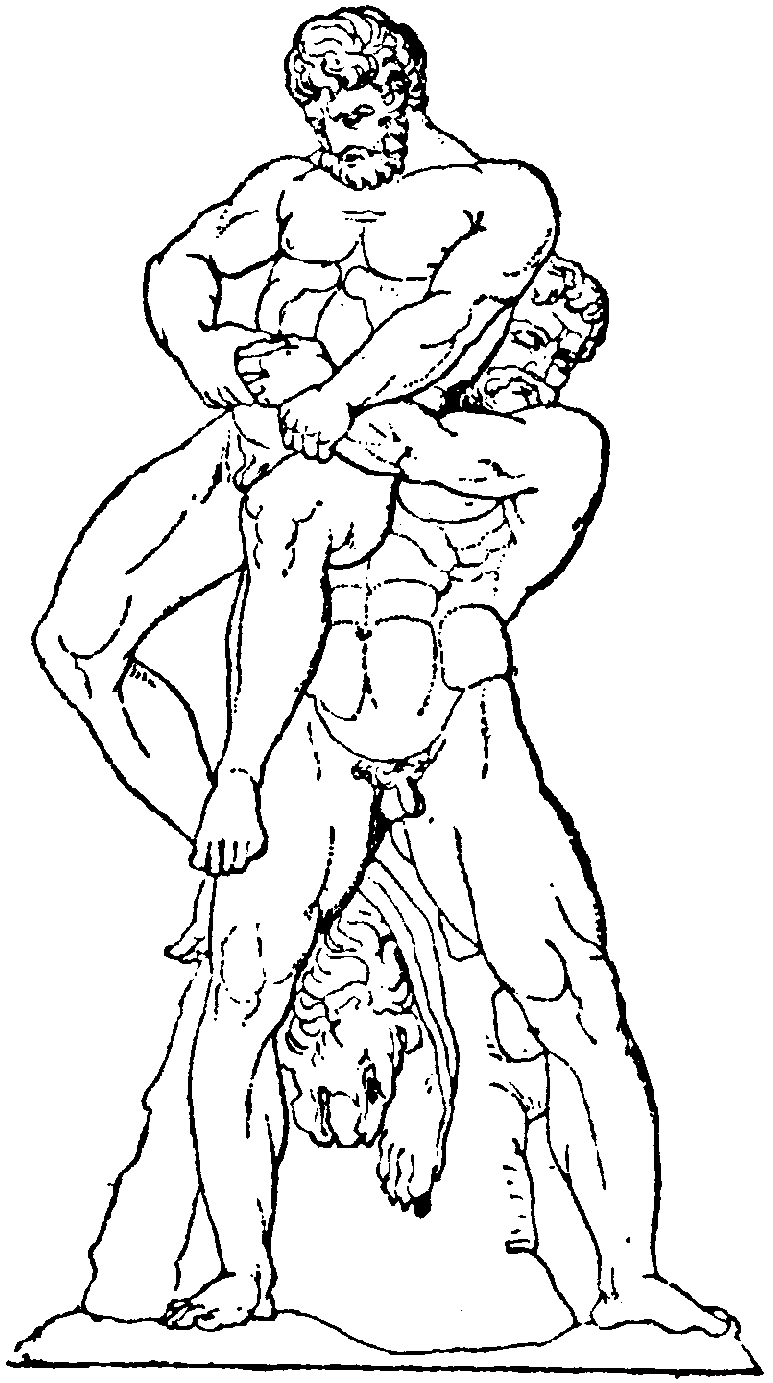
One of the weirdnesses of Heracles / Hercules is that he's at the same time a mortal hero and a god – quite a unique feature for the Greek mythology. He should be representing the raw, brutal force, the original strength that allowed humans to subjugate nature. He was the first human hunter, the one who wasn't afraid to make a kill, if needed to survive, but wasn't seeking bloodshed either, since he had better things to do than club his neighbor to death. For instance, learn to use a plow. At the same time, Heracles is the ultimate hero of civilization, the one who removes the last monsters from the earth, so cities can expand and merchants can travel and spread the word without inhibitions. Heracles is credited with having taught the humans a number of useful things – the coolest, in my opinion, being that the Earth is a globe – something he learned while supporting it when Atlas was busy.

The Etruscan Hercle

The Roman Hercules is...well, not Roman, for the beginning. He was initially an Etruscan character named Hercle, depicted on coins and statuettes as early as the 6th century BC. Some scholars believe this Hercle was a sort of founding father of the Etruscans; or maybe even not a hero at all, but one of the main gods, given that, in some representations, he is associated with the goddess Menrva – possibly as her husband.

In other images, Hercle appears as a mature, bearded man, being breastfed by the goddess Uni. The myth behind this rather unusual imagery is unknown, but the coincidence is striking – the Greek Heracles was also breastfed by Hera, though that was accidental, and it happened when the hero was still a baby. (I assume you've guessed it, Uni – Hera – Juno are goddesses playing roughly the same role for Etruscans, Greeks and Romans).

The main thing left behind by this Hercle character was the interjection Hercle! or Mehercle!, which apparently was quite common in spoken Latin, often used in dramatic dialogues by Plautus. And Plautus being his funny little self, it's not impossible that this was a curse word.

The Romans adopted Hercle and, using the famous interpretatio graeca or interpretatio romana, which meant stealing other peoples' gods because there's no telling when you might need them, they mixed him with the Greek Heracles to obtain their own Hercules.
The first thing Hercules did in Rome was to shave

Hercules in Rome

Hercules visited Rome very early, when there was no Rome – just a few houses scattered here and there. He went to sleep and left his cattle unguarded, and a local thief slash fire-breathing monster named Cacus stole some. (Why was Hercules guarding cattle all the way in the Italian peninsula? It has something to do with his 10th labor, and, in all due honesty, he had just stolen the cattle himself from the previous owner, Geryon.)

Most naturally, Hercules killed Cacus and got his cattle back, as well as the eternal gratitude of the (few) Romans. Tired after the fight, Hercules saw Bona Dea (a fertility goddess) celebrating her rites, and asked her for a drink to quench his thirst. The goddess, however, did not allow him to drink from her spring, because her ceremonies were open only to women, no men allowed. So Hercules built his own temple on the spot, and banned women from entering it. Real mature. The temple was called Herculis Invicti Ara Maxima and stood in Forum Boarium – Rome's cattle market. (Spend your entire life killing monsters and saving people, and remain forever associated with cows because of one silly incident. Go figure.)

The Romans also believed that Hercules erected other buildings while in the area, including a dam and a road that separated lake Lucrin from the sea, in Campania. As always, the Romans were very serious about their roads.

As a god, Hercules took over some responsibilities he did not have in Greece: he was the patron of gladiators, stone quarries and thermal baths. No idea what's up with the baths. Herculaneum near Vesuvius and another town with the same name in Dacia were both famous for the thermal waters.

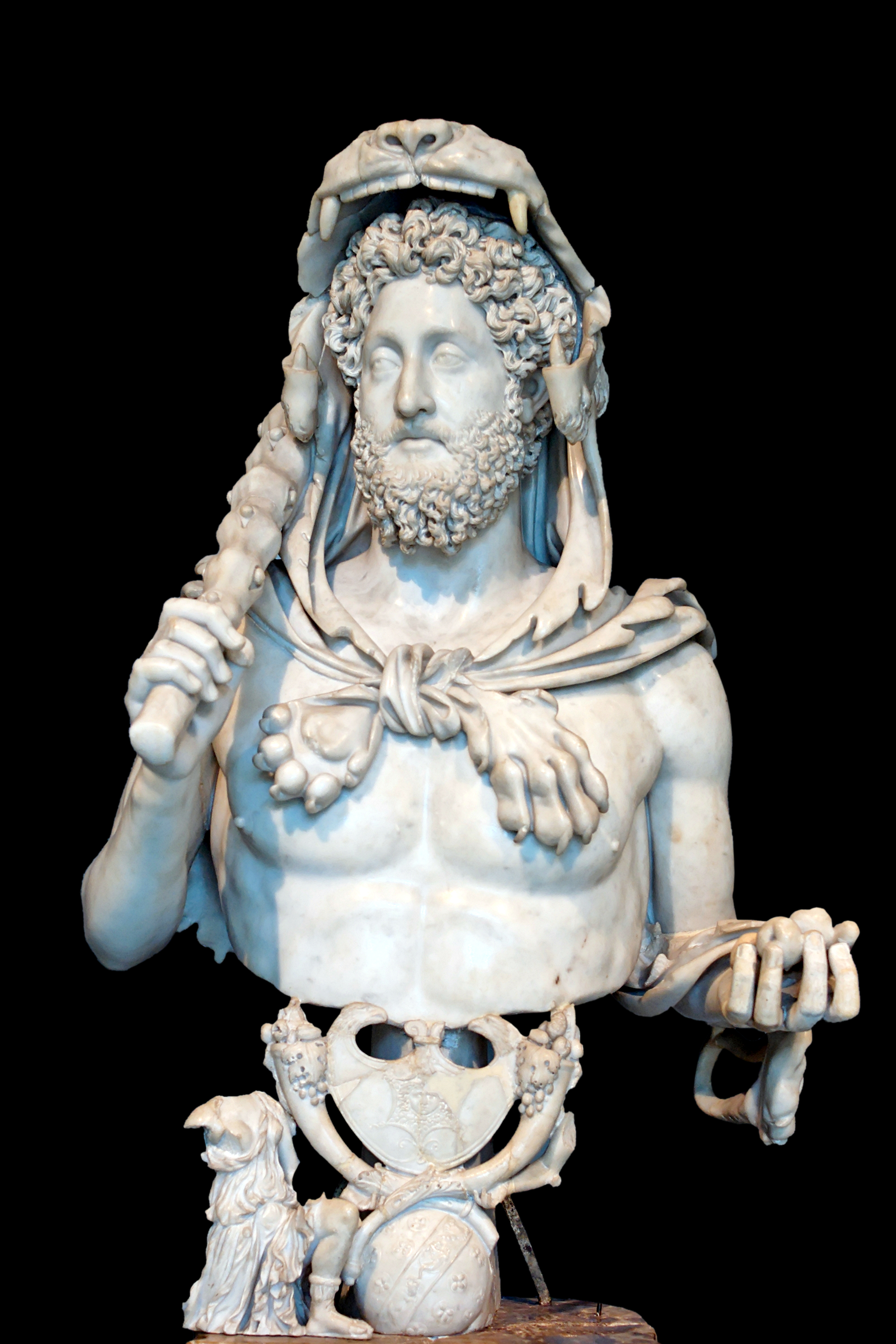
Commodus in carnival costume

A number of Roman emperors used the image of Hercules, the best known being Commodus, who was mad and cruel, but apparently not completely unworthy of the association, at least from the point of view of physical strength. Still, that club doesn't exactly scream sophistication.  

Thursday, January 6, 2011

The Differences between Cronus and Saturn

This issue has been bugging me for some time. Technically, the Greek Cronus should be one and the same with the Roman Saturn. I mean, if you look at their family tree, it becomes quite clear:

Cronus is the son of Uranus and Gaia; he married Rhea and together they had six children: Demeter, Hera, Hades, Hestia, Poseidon and Zeus

Saturn is the son of Caelus and Terra; he married Ops and together they had six children: Ceres, Juno, Pluto, Vesta, Neptune and Jupiter

But when you take a closer look at Cronus and Saturn, they couldn't be more different. Cronus is hectic, cruel, primitive and downright evil, while Saturn is actually quite a nice guy. Well, sure, he castrated his father and ate his children, but he also presided over Saturnalia, the coolest festival in Rome, and the Romans had the coolest festivals the world has ever seen anyway.

In Athens, the similar festival was called Kronia – and the same stuff happened, the normal social rules were dissolved, slaves were allowed to eat together with their masters and so on – but it took place in summer, and let's face it, summer festivals are not nearly as much fun as winter ones. I suspect it has something to do with the fact that you cannot drink as much as summer as you can during cold winter days. Plus, bear in mind that decent women were not allowed to attend – how boring is that?

Cronus and his life-threatening sickle
Cronus and his life-threatening sickle 

The sickle Cronus has in his hand is the weapon he used to castrate his father. In the representations of Saturn, he usually has a sickle in one hand and a bundle of wheat in the other, which makes the blade far less threatening; it's just an agrarian tool like any other. By the way, the symbolism of the sickle is quite funny – the sons of Cronus/Saturn cut him into a thousand pieces with the same sickle when they became all-powerful, so it's sort of cruel to represent the Titan with it in his hand all the time. Oh, and in general, the sickle used in representations of agrarian gods (Saturn, but also Demeter/Ceres) was made of gold, the one used to castrate Uranus was made of stone. Ouch.

There's one more thing I don't get: the time when Cronus ruled the world was considered the Golden Age. Lies and deceit did not exist during that period, immorality had not yet been invented, everybody was pure, all humans spoke the same language and understood each other – in fact, even animals spoke the same language as humans. So... this means that castrating your father and eating your children is not immoral?

Saturn eating his children - such a misunderstood character!

In Roman mythology, on the other hand, the Golden Age began after Saturn was overthrown by his children. The Titan, now jobless, settled for a smaller task than ruling the world, moved to the Italian peninsula and created the perfect society there. Until he got bored with it, I guess – but still, it makes more sense than the Greek version of the story. That's why I like Romans more than Greeks – they make sense.