Showing posts with label fun facts. Show all posts

Sunday, December 14, 2014

Against Hieroglyph Tattoos

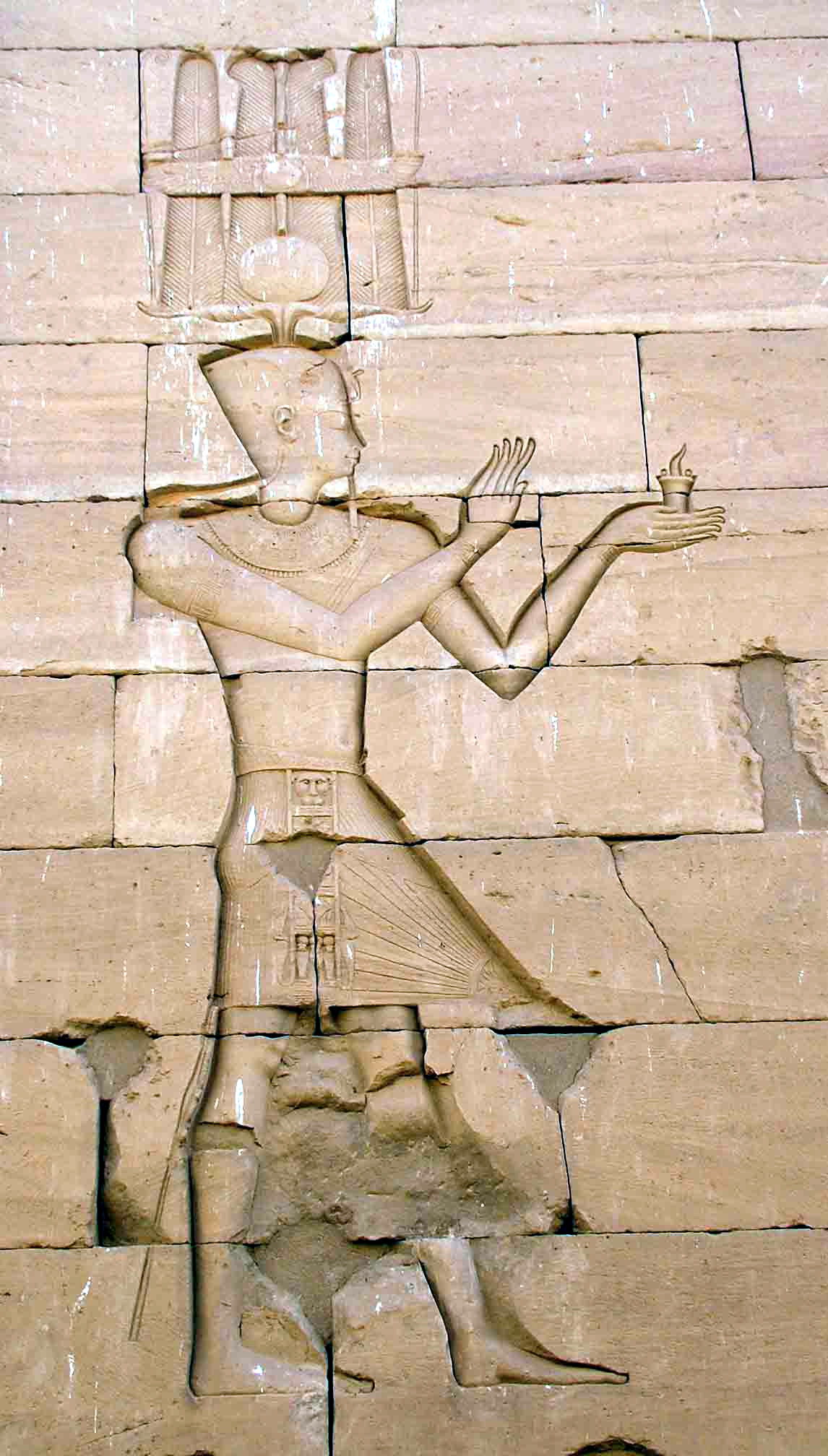
Are you thinking of getting a hieroglyph tattoo? Maybe an eye of Horus, or an ankh, or your name in a cartouche? Don't. It's disrespectful towards a great culture and all that, but also, because Egyptian scribes were jerks, your name in a cartouche may end up saying “the wearer frequently performs unnatural acts with ducks”.

Because...

1. The ancient Egyptians actually had an alphabet. Did you know that? I had no idea. Some of the hieroglyphs stand for a single consonant, resulting in a very usable and friendly alphabet. Which the scribes did not use – or rather, did not always use.
And I have a theory why, a very scientific and well-researched theory, not at all made up while writing this: the scribes had a good life, not plowing, not going to war, not washing their own dirty clothes, just writing, so they tried to keep it for themselves, and made writing as complicated as possible. Don't take my word for it, go read the Miscellanea, the texts used for training new scribes. They say “we have a good life, we do not plow, we do not go to war, we do not do our own laundry, so let's keep it a secret by making writing as confusing as possible” (more or less).

... and remember, children, you can always spell Son of Horus backwards as Son of the mailman. Just keep a straight face while pretending to write from dictation.

2. You know what's the hieroglyph for road? Why, this:


Seriously, does that look like a road to you? No wonder they weren't very keen on using wheeled vehicles. And what are those, speed bumps? (Upon further research, they're shrub/papyrus flowers. Still doesn't make sense.)

3. At least the hieroglyphs for man and woman are fairly intuitive.


Men had arms, women did not. But, don't worry, women gained arms while giving birth:

Gardiner's classification lists 56 hieroglyphs under “Man and his occupations” and only 7 under “Woman and her occupations”, including this little “queen holding a flower”, which has got to be the saddest thing I've seen all week:

I was about to add misogyny on the list of why scribes were jerks, but, in all due honesty, the hieroglyphs about men and their occupations can be broadly divided into man sitting down and man running around like an idiot waving a stick. Oh, and man holding two giraffes – undoubtedly, a very popular occupation in ancient Egypt.

4. Gardiner has cataloged no less than 54 hieroglyphs depicting birds. 54 birds. Before you can even think about spelling your own name, you need to identify 54 birds, including a lapwing and a hoopoe (and none of them stands for performing unnatural acts with a duck – or at least I haven't found that one yet).

- OMG, look at that handwriting!
- No way, you can't even tell a black ibis from a crested ibis.
- How did he even pass first grade? 

5. Hieroglyphs were written right to left. Or left to write. Or upwards, or downwards. Sometimes in the same text. They used a mixture of alphabetic signs, logographs (representing morphemes), and ideographs (pretty pictures of the object depicted). Sometimes in the same word. Because, hey, let's twist Monsieur Champollion's head around and see how fast it spins.

6. And speaking of Monsieur Champollion, don't assume your tattoo is safe because hieroglyphs have been fully deciphered. One Ptolemaic jerk's idea of a pun was a text written almost entirely with crocodiles. That is just one of the many not deciphered yet. I've decided it refers to some very brave unnatural acts with crocodiles, but I may be wrong.

7. A papyrus from a collection called the Theban Magical Library (which may or may not come from Thebes, may or may not be related to magic, and may or may not have come from a library) is written in a mixture of no less than seven (yes, seven) writing systems (Hieratic, Demotic, alphabetic Demotic, Greek, Cipher, old Coptic, and Charakteres – just in case you don't trust me, count them, seven). There, that's proof for you, right there – they were trying to make things complicated at all costs, for the sole reason of being jerks.

So go get a tattoo of a cat, like everybody else. Not an Egyptian cat, just a regular cat. Oh, and here are the hieroglyphs for urination and defecation. You're welcome.

Tuesday, October 19, 2010

10 Things you don't need to know about Augustus

If you have any interest in the period, there's lots of stuff you need to know about the founder of the Roman Empire, and tons of good books out there to keep you entertained and informed. But I've compiled a list of things you don't need to know about Augustus, so be my guest to forget them as soon as you read them. If you can, that is. I'm willing to bet that the first thing you're going to remember from now on about Augustus is that...

1. He applied red-hot nutshells on his legs, in order to make the hair grow smoother. Interesting technique, I wonder why it hasn't made it to the modern age.

2. He married Livia Drusilla when she was already six-months pregnant with her previous husband, Tiberius Claudius Nero. Augustus had already gone through two failed engagements and one divorce when he forced Claudius Nero to divorce Livia, and married her almost instantly. Love madness? Political calculations, since Livia was a descendent of a highly-regarded patrician Roman family? Hard to tell, after all these years.
What we know for sure is that the couple never had any children together, though both had children from previous marriages. Allegedly, Livia got pregnant once but she miscarried. This is unusual, considering Augustus' obsession with large families, but it's possible that Livia tried to reduce the number of potential heirs to the family fortune, protecting in this way the chances of her first born – and with great success.
The certain thing is that the pair formed a formidable team, and Livia continued to influence the Roman political life even after her husband's death.

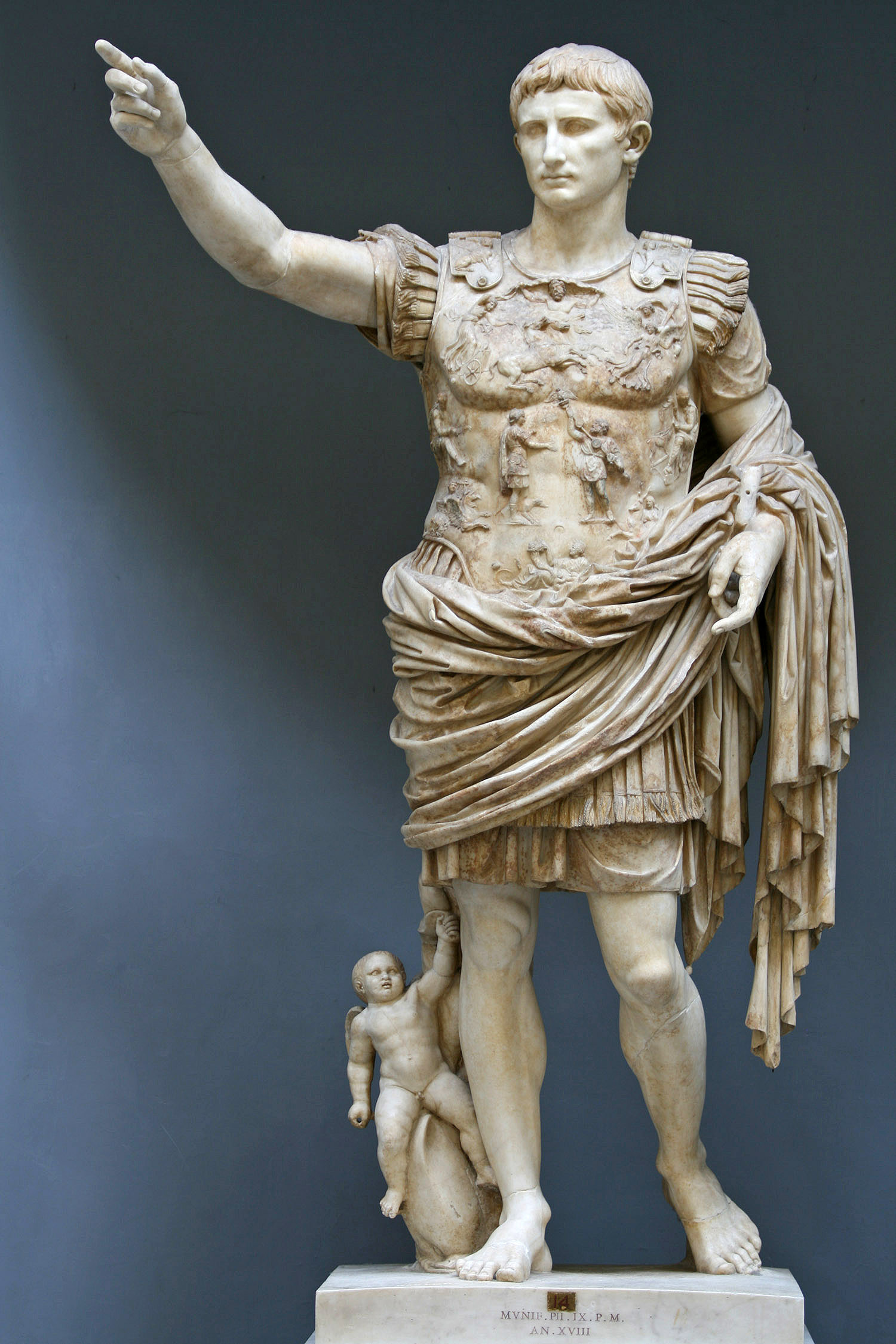
3. Augustus was a monobrow. So much about realism in ancient Roman portrait sculpture.

Augustus of Prima Porta, probably the most famous representation of the first Roman Emperor. Here's another thing you don't need to know: the statue was designed to stay in one niche, so it uses an optical illusion: the raised hand is longer than it should be, in order to dominate the scene. The back of the statue is left unfinished, as it was going to be against the wall. 

4. He wasn't a morning person. Well, coffee was not available, so whenever he knew he had duties to attend to in the morning, he slept at a friend's house, closer to the location where he had to arrive the next morning.

5. It seems unlikely that the man had any sense of humor, but it's hard to live almost 80 years without cracking a single joke, so here goes one, as reported by Quintilian: Augustus was informed that a tree was growing on an altar in his honor – which was probably supposed to be interpreted as a good omen. His reply was: “Well, this is clear proof of how often you use the altar to honor me”.

6. He was superstitious. All Romans were, but Augustus more than the average. If he put on his shoes the wrong way in the morning, the left instead of right, he would consider it a bad omen and avoid making major decisions during the day.

7. He died in the same room as his father Octavius, and stands out as the only emperor of the Julio-Claudian dynasty who managed to die peacefully in his own bed, without significant suspicions of foul play. His last words were to his wife: "Live mindful of our wedlock, Livia, and farewell". (What? Did he expect her to re-marry or to start throwing orgies in her 70s?)

8. He wasn't a heavy drinker, but we know that his favorite wine was Raetian.

Yep, it's still Augustus. In disguise. 

9. Augustus left us with a memorable comment on one of the events that would traumatize Christianity for the following centuries. Upon hearing that King Herod of the Jews had ordered boys under the age of two to be put to death, he said: "I'd rather be Herod's pig than Herod's son."

10. He was obsessed with simplicity in his daily life, to the point where you might call him cheap. His house was modest, his furniture barely met the standards of a common citizen, and he insisted on wearing clothes made by the women of the house (Livia and his daughter, Julia. They were less thrilled with the joys of frugal living, and this escalated into several domestic conflicts, culminating with Julia's exile and death.)